Showing posts with label parents. Show all posts

Monday, March 11, 2013

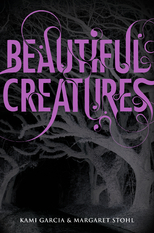
Book Review: Beautiful Creatures by Kami Garcia and Margaret Stohl

This novel is a nugget of Southern life not often found in YA these days.  Often, books set in the South are Civil War laden and Historical Fiction.  Beautiful Creatures, with its modern day Gatlin setting, was not your "typical" YA location.  For this reason, I liked the book.  The fresh perspective and setting gave characters some room to stand out from all the dystopian love tragedies out there. 

However, I don't know what it was about this book that left me wanting more, feeling somewhat unfulfilled. Something was missing. There was this constant vibe of Twilight and Harry Potter and something else. As I read, I felt like some parts were overwritten, like missing his dead mother, and other parts were underwritten leaving me to fill in the blanks, like dad and his lack of writing.


I wanted to love this book. I was pulled in by the sensory language (Lena's hair constantly curling and uncurling) but then left hanging there by the lack of character depth and development in some of the key auxiliary characters (even Amma seemed lacking). I still intend to see the movie in hopes the plot will be redeemed, but sadly, I'm just not feeling the pull to read the rest of the books in the series.


Sunday, March 3, 2013

5 Reasons Adults Should Read with Teenagers

Remember that feeling of picking out a stack of books, running to the most obliging adult, and begging them to read you a story?  Then there is that warm, tingly feeling you still have when you see a book from elementary school--one of those the teacher read to the class as we all lost ourselves in an imaginary world for a bit. Reading is one of those common experiences we all share.  It is entertainment, education and promotes bonding. We begin experiencing reading even before we can do it by ourselves.  By middle and high school, something happens though.  No longer do we look forward to those "class books" and those shared moments.  Why is this?  What changed?

Well, here's what I see everyday in my job as a 7th grade English teacher.  My middle school students can all tell me about a book sharing experience that brings out a smile, however, these experiences are few and far between after 5th grade.  Frequently, parents ask me what books their child should be reading.  That one is easy to answer.   Too often, parents ask what book their child IS reading and each time I answer, I am sure to include a reason or two for a parent to pick up a book with their child.

Here are my top five reasons adults should continue to read with the teens in their lives, well after the kids are reading on their own:

5. Fun: Let's face it, many of these YA books are big in the entertainment biz.  Just look at Harry Potter, Twilight and most recently, Hunger Games.  Reading some of these pop culture phenomenons along with your kids can offer up a fun experience for the whole family.  Last year, during the Hunger Games boom, so many kids were reading the series, we organized a field trip to the movie.  Nearly the entire 7th grade (300 kids) went and we had parents volunteering to chaperone like we had never had before.  While there was learning involved, the whole experience ended up more like a big celebration of pop culture and community building.

4. Conversation: For many adults, talking to teens feels like a litany of chores lists, commands and discipline.  Having a common book to talk about can lighten the mood a little and give both you and your child the chance to practice having adult conversations.  Book talk can eliminate the threat of judgement and "personal" topics, allowing both kids and parents to let down their guard a bit.

3. Support: Reading, even fiction novels, is essential for learning.  As the readers age and become more and more complex, so does the structure, vocabulary and content of the books written for them.  To help students access the new levels of reading and analysis, they need help.  They need to hear conversations about the books, they need to hear a broader vocabulary and they need to develop an understanding of the content of the novel.  Even the most informal of conversations about the text can boost their engagement and encourage them to pursue the outcome of a more challenging story.

2. Bonding: Even if you aren't entertained by the books your teen is reading, there is this unspoken bond that happens between people who have read the same book, as if only they share secrets the author has whispered.  Reading these books also gives adults an inside look at the topics that interest, intrigue, confuse and fascinate their developing young adult.

1. Unsuspected Surveillance: Odd as it may seem, reading the same books as the teens in your life gives you an inside look into their world and may alert you to problems before they become tragedies.  With this one, you do have to use some caution and intelligence so you don't jump to conclusions.  Teens are naturally interested in drama, so the teen pregnancy stories and stories about drug abuse and such do not mean your child is involved in these activities.  However, being able to have those conversations mentioned in reason four will give you the open door you need if you suspect poor choices.  The best example I have of this actually inspired this blog post and comes from my best friend and her stepson.  I noticed he posted on his Facebook about someone creating a fake profile with the name Hannah Baker and talking about people from school.  Immediately, I was alarmed and able to message both him and my friend about handling the situation carefully.  See, in the book Thirteen Reasons Why by Jay Asher, Hannah Baker is a character who committed suicide and left her suicide note in the form of thirteen tapes to be passed along between the thirteen people she felt responsible for her choice.  A fact I knew because I had recently read the heart wrenching book.

Teens often hide "their world" from adults and believe no one will understand them.  They want to reach out and connect with us, but frequently don't know how.  They try using coded messages and actions like the Facebook incident above, hoping someone will pick up on the message and reach out to them.  Sharing the reading experience with them provides avenues for communication and trust that may not be there otherwise.  Give it a try, ask your kids what they are reading, pick up a copy and join them.  Can't hurt.
Saturday, October 20, 2012

It's Homecoming Season

I'm taking this moment for a shameless brag session.  I am proud of my son.  He was in the NICU as a newborn and had to survive my inept parenting since he was the first and I was only 22 years old.  Now, he is closing in on 15 and a constant joy in my life.  From asthma to struggles in math, from his amazing sense of humor and his natural inner peace, he has taught me how to love and how to be a parent.  It is for him that I keep my feet on the ground and my head level.  Enjoy your first Homecoming my little Leprechaun!!  I love you!!!


Oh, and thank for letting me help you pick out your outfit...I don't like Patrick Jane (Simon Baker) at all...


Monday, June 18, 2012

Book Review: Taking Lessons from Ernest by Trish Stewart

Taking Lessons from Ernest is a tale of disappointment and reclamation. Trish Stewart does an eloquent job bringing the emotions of "hitting rock bottom" to life through her characters Eric and Oliver. Through her words and the appearance of Hemingway's ghost, she has crafted a tale of true healing as we follow Eric on his journey to fulfill his father's last wishes. This is a must read for anyone who feels like life has settled into a pit and they do not have the strength to climb out and fight for happiness.


Wednesday, January 11, 2012

Create your Pinocchio: Building a Person from Ideas

I don't know if it was because he was a boy or because I was creeped out by his growing nose and foolish mistakes, but as a kid I never liked Pinocchio.  So, I could never understand why Giuseppe would want him to become a real boy.  I mean who wants to deal with a pain in the ass, dishonest little kid who doesn't listen? (Thanks for putting up with me Mom.)  Giuseppe, much like a parent, did see something in Pinocchio; he saw a chance for his ideas to come to life.

Since committing to the transformation of my writing from hobby to career, I am beginning to understand Giuseppe better and wish Pinocchio could be truly real.  Because if he could be real, then my Kaitlin and Gracie could be real and we could hang out and talk just once.  I spend so much time developing them in my head and on my computer it's as if they are my children.  As I write, I can hear their voices and see through Kaitlin's eyes.  I feel their emotions and understand their thoughts.  Now, there is the chance that my meds quit working again, but I like to think I have gotten good at developing my characters.  At least that's what the people in my writing group let me believe (and that has nothing to do with the fact that they are with me in a small room at the end of a long hallway as they critique my work).

Last night, at writer's group, I was asked what I do to develop my characters.  I tried to answer this on the spot, but I was drowning in the flattery and really couldn't think about my process clearly enough to explain.  It seems I remember reading an article or chapter about character development that talked about interviewing your characters.  I am sure that works great...if you are good at asking questions.  I am not.

I tend to work more on intuition and this character sketch lesson I have taught to my 7th graders.  What are the habits of my characters?  Habits you wouldn’t explicitly write into the book, but that make them more human.  My character, Kaitlin, for example, is a Diet Coke addict.  It's a little thing, but anytime food is mentioned, you know she will have a Diet Coke--just like you know what your best friend would have to drink.  These little habits help readers connect to the characters more and brings fictional people to life.

Another way character can be developed is by writing notes on their back story and items they own.  My character, Kaitlin, was abandoned at the age of four, yet we know her birthday.  How is that?  I was going to brush it off as YA literary magic and hope my readers never wondered.  This deception kept me awake and I decided to ask the question myself.  Immediately, I found myself jotting notes about the items found with her in a backpack.  There is information in these items that give us her birth date.  However, these items also began to tell me who Kaitlin's parents were and in turn who she is.  Suddenly, I could see her as well as my own kids.

Finally, I think about what the characters look like and then I watch people when I am out.  I still haven't "seen" Kaitlin, but her adoptive mother I have seen.  I was sitting in a class one Saturday morning when instructor came in and it was clear, she was Gracie.  I knew it as soon as I saw her.  I don't think I could tell you much of what I learned in this class, but I have copious notes about her mannerisms and belief systems.

When building your characters, the best thing you can do is spend time with them.  Look for them in your day to day interactions.  During typical encounters ask yourself, what would my character do in this situation?  Then, weave these mundane daily actions and habits into the fabric of your fiction to add depth to who your character truly is.  Create your Pinocchio.

Wednesday, December 28, 2011

Book Review: Deadline by Chris Crutcher


Chris Crutcher's novel, Deadline provides readers with a fresh look at teenagers and drama.  The main character is funny and even a bit snarky (especially when it comes to his opinion of the education he's being offered) but not so over the top that you find him annoying.  His courage as he faces death and the experiences he allows himself because of his choice not to tell, leave you wondering what you would do if you found out a similar fate.

Especially endearing is his relationships with others in the book.  There is not one character on the book that is left out of Ben's connections.  He manages to reach everyone, in one way or another, with his message about living life one day at a time.

A compelling read, with a powerful message.

http://www.goodreads.com/book/show/275844.Deadline

Book Review: Small as a Mustard Seed by Shelli Johnson


Small as a Mustard Seed was like stepping into someone's life. The characters are gut-wrenchingly honest and so well written, you feel their pain, their struggle and their relief as they grow. As you watch the story unfold through the eyes of the older sister, you wonder what the others in the family are experiencing at first. However, as the story goes on, you realize that one perspective is enough because she is so observant and raw about what she sees and hears in her world. 


While the book is set in post-Korea and during the Vietnam era, Shelli Johnson's short emotionally packed book keeps us focused on the people so well that it could be happening at any time. These characters could be your neighbors, friends or family, you feel so close to what is happening in their lives and want to reach out to them. Despite their flaws (which make them so real) Shelli portrays each of them with great care and respect while painting a perfect portrait of living with PTSD. This is a definite must read!!


http://www.goodreads.com/book/show/12086697-small-as-a-mustard-seed

Tuesday, December 20, 2011

Courage in the Face of Judgment

 Deciding on what kind of candy I need while I'm striving to reach the ambitious writing goal I set is difficult. (Come on now, we all know candy is a need not a want.)  This is an arduous thought process, this decision making stuff.  I mean, if I get the chocolate it might not be enough chocolate.  If I get the Laffy Taffy, I have to unwrap each one and then I would have to stop typing.  Wait, that might be good for my diet then.  Twizzlers don't come individually wrapped, so I can type and snack, but the kids will bother me because they want some too.  UGH!  Sound familiar?  Everyone makes choices in their life everyday.  Some are easier than others, but we all know what it is like to make a tough choice.  So why is it then, that we judge another person's decisions?

Almost daily, I see students, teachers, parents making decisions at break neck pace.  And just as fast, there is someone there judging these decisions and sharing their well-intended opinions.  With all of this immediate feedback it's no wonder decisions are tough.  Make the wrong one and the world will haunt you for it.  Make the right one and someone will tell you what you should have done differently.  What is it that makes us all forget the difficulty that goes into making decisions, deciding on the value of opportunity cost?

I just read a beautiful novel, As Small as a Mustard Seed, by Shelli Johnson.  I spent so much of the novel questioning the decisions of the mother in the story as I watched her through the eyes of her oldest daughter. She struggled with the cost of protecting family over protecting just the children.  For much of it, I was feeling the burns of old wounds I have because of my own mother's similar struggle.  Yet, as the story continues, Shelli allows us to see the family years later through the eyes of an adult daughter.  A daughter who has lived her own life away from the struggles at home and has a fresh perspective of her youth.  It is amazing how our opinions of some one's choices change with time, age, experience and perspective.

I mention this because I was feeling very stuck with the mother in my own novel.  I didn't like her.  Here I am creating this woman, and I'm disgusted by her and her choices.  No matter how I tried to write her, I struggled because I felt wrong making her likable now when her choices as a younger mother were appalling.  Reading Shelli's novel helped me see that perspective and life experience are the things that make it OK to change our opinions of the decisions people in our lives make.  She helped me see that I NEED to work through writing this character because I NEED to work through these issues in my own life as well.  I need to remember to respect the courage it takes to make a decision, while well aware of the judgments you are facing.

Wednesday, December 14, 2011

What Makes a Family?

As I write my first novel, I've thought a great deal about family.  Growing up in a family of four, (mom, dad, younger brother and myself), I thought I knew what family meant.  I mean, we had it all didn't we?  The three bedroom house, two cars, two dogs, two cats and all the Christmas lights a kid could ever remember wanting.  Family is picking on your little brother so much he cries and the very next moment he is sticking up for you to the neighborhood bully.  Then an hour later, he and the same bully are caught reading your diary in your room so you beat them both up.  Family is a mom and a dad going to work during the day, home in the evenings, t-ball and softball games, backyard BBQ and camping with neighbors.  Or is it?

Now as my family is crumbling and I am experiencing my own battle with the infamous plague of families--divorce.  I find I am learning what family is and what it is not.  I'm realizing that family, as I have come to learn it, is a sham.  None of the previously mentioned experiences mean anything without love.  It seems that so often we equate family to numbers, 2.5 kids, $84,000 average net worth, 2 parents, 4 grandparents and so on.  Where is the love number?  

Based on the average income of divorce lawyers ($48,353-$77,968 annually, PayScale.com, May 2011), it may seem to some that the love number has a dollar sign attached to it.  I know there are days when I look at those red numbers jumping from my online banking statement and think the same thing; especially this time of year.  Despair starts to take over, but then, one of my boys asks me for help with something or shares a story with me about a friend at school who may be moving away.  Smack!  Back in reality, I can clearly see that how much spending money one has does not equate love.  And not only can I see it; it is obvious that my boys somehow instinctively know this better than most adults.  Sure they ask for things, but they know those things do not mean I love them.  

Love, I am learning, also is not measured in increments of 60 or by 30-31 boxes on a calendar.  Nope, you won't find any measure of the love that constitutes a family on the clock or calendar on your wall.  Go ahead and fill your days with times and places, events and people.  Let me know if this brings you love.  As my children are learning how to actually "spend time with" their parents, especially Dad, it is becoming painfully obvious that love is not measured by time.  Sure, they get excited about seeing Dad.  They talk incessantly when he comes over for his Wednesday night visit--for about a half hour.  After that, they are back to iPods, video games or just hanging in their rooms.  They aren't upset when he is late because of traffic or leaves early because they are ignoring him.  For the kids, time does not equate love.

Ask any adult what their two most valuable liquid assets are and most will tell you time and money.  Ask any child, and it's love (maybe candy, but this is not about candy, so we will just ignore Matthew's response).  They feel their best when they know they are loved.  The best part is, the love doesn't even have to come from their parents (thank goodness, right?).  Just look at all the adopted, step and orphaned children that manage to find one adult to love them no matter what.  These kids are able to become contributing adults, go on to love and build their own families.  Kids are better at "family" than adults are.  Kids thrive on love!  

Next time you see any size group of people, regardless of the combination of race, creed, gender or age, look in their eyes.  Is there love?  Is there an ebb and flow of sacrifice and contribution?  Is there a comfort level that accepts successes and mistakes?  That is a family.  You don't need to know how long they have known each other or what country the baby is adopted from.  No numbers, no statistics, no averages.  None of that matters.  Love, love makes them a family.